


 VIE
 한국어
News
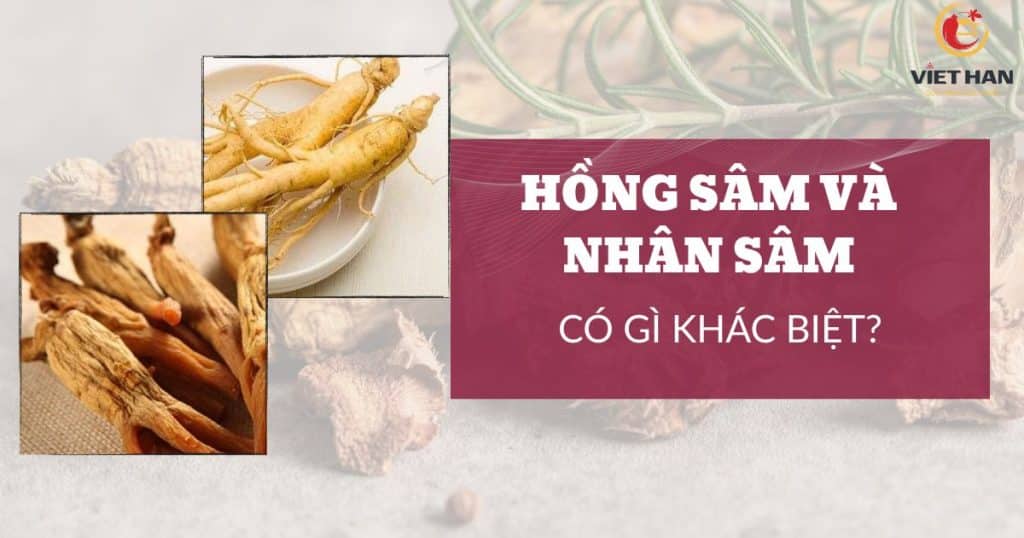
What is the difference between red ginseng and regular ginseng? Distinguishing between red ginseng and regular ginseng.
Feb
NỘI DUNG
How is red ginseng different from fresh ginseng? Many people mistakenly think that red ginseng and fresh ginseng (nhân sâm) are just two different names for the same precious herb. However, in reality, red ginseng is not ordinary fresh ginseng but the result of a meticulous processing method. So, how is red ginseng different from fresh ginseng? Let’s find out together with Nhân sâm Việt Hàn – Siêu thị Sâm Soobin in the article below.
>>> See more:
- Korean Red Ginseng Gold: What makes it different from regular red ginseng?
- Korean red ginseng water: Benefits and how to choose in 2025
What is fresh ginseng (nhân sâm)?
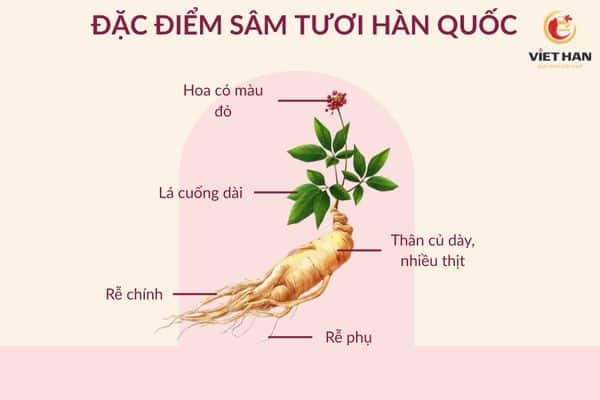
Fresh ginseng is a rare and precious herb with the scientific name Panax ginseng, belonging to the Araliaceae family. The root of the ginseng plant is widely used in both traditional and modern medicine thanks to its rich content of ginsenosides along with essential vitamins, minerals, and amino acids, bringing many health benefits. That is why fresh ginseng is called the “king of herbs” or “divine medicine” for its ability to nourish the body, strengthen resistance, and support the treatment of many diseases.
Fresh ginseng is the raw, unprocessed ginseng root, usually Korean fresh ginseng harvested after about 4 to 6 years of cultivation under special climatic and soil conditions. This is the original form of ginseng, not yet subjected to heat processing, so it retains its natural shape, color, and original components.
- Color and appearance: Fresh root, ivory white or pale yellow in color, with a soft, moist surface.
- High water content: Fresh ginseng contains a lot of water, so it spoils easily if not stored in cold conditions or properly vacuum-sealed.
- Lower ginsenoside content: Because it has not undergone heat processing, the ginsenosides in fresh ginseng are not fully transformed into highly bioactive forms.
- Main benefits: Helps boost vitality, stimulate circulation, reduce fatigue quickly, but may not be suitable for people with high blood pressure if used incorrectly.
What is red ginseng?
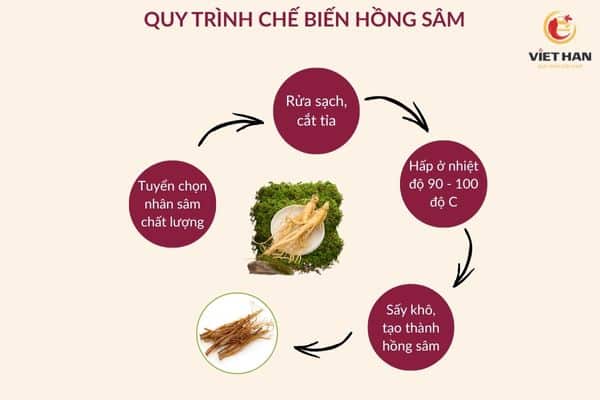
Red ginseng is fresh ginseng that has been steamed and dried multiple times according to traditional methods. Through this process, the ginseng changes from white to reddish-brown or mahogany color, while significantly increasing the content of valuable active compounds – especially ginsenosides – thereby enhancing its pharmacological effectiveness.
- Color and appearance: Dried root, hard, with characteristic reddish-brown color, slightly glossy surface due to natural sugars being caramelized.
- Low moisture content: Only about 14%, allowing red ginseng to be stored for a long time without preservatives.
- High ginsenoside content: Thanks to the steaming process, many ginsenosides are transformed into more easily absorbed forms, making red ginseng more comprehensive and powerful than fresh ginseng.
- Outstanding benefits: Red ginseng helps stabilize blood pressure, boost immunity, provide antioxidant effects, support fatigue recovery, and is especially suitable for the elderly or those recovering from illness. It is also suitable for a wider range of users.
>> See more: What is red ginseng? What are the benefits of red ginseng?
How is red ginseng different from fresh ginseng?
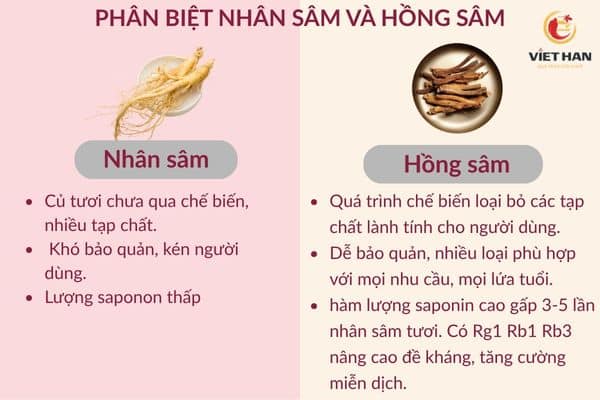
Many people wonder, “Is red ginseng the same as fresh ginseng?” In fact, red ginseng and fresh ginseng are completely different, even though red ginseng is derived from fresh ginseng, especially 6-year-old roots.
To distinguish red ginseng from fresh ginseng, refer to the comparison table below:
| Criteria | Fresh ginseng (nhân sâm) | Red ginseng |
| Color | Ivory white or pale yellow, sometimes still covered in soil. | Characteristic reddish-brown or deep mahogany color due to multiple steaming and drying cycles. |
| Aroma and taste | Light, fresh earthy ginseng aroma. Distinct bitterness followed by a mild lingering sweetness. | Stronger, richer aroma. Milder bitterness with deeper and longer-lasting sweetness. |
| Processing method | Raw fresh root, no heat treatment. | Steamed and dried multiple times, increasing activity and eliminating some unfavorable compounds. |
| Active compound content | Contains ginsenosides in an incompletely transformed form, which may cause irritation if used incorrectly. | Ginsenosides are more activated and easily absorbed, delivering optimal effectiveness. |
| Main benefits | Boosts vitality, provides quick alertness but may increase blood pressure if misused. | Helps stabilize blood pressure, boost immunity, anti-aging, protect the liver, and aid faster recovery. |
| Suitable users | Many people still prefer fresh ginseng for soaking in alcohol, honey, or cooking soups. However, it should be limited due to its drawbacks. | Suitable for a wide range of users: young people, women, men, children, the elderly, those who are weak, or have chronic conditions… |
| Price | Usually lower than red ginseng of the same type and age since it is not processed. | Easier to store, can be kept at room temperature (dry, ventilated place) for a long time. Shelf life is extended (several years if properly packaged and stored) due to complete drying. |
| Storage ability | Spoils easily, requires refrigeration or vacuum sealing. | Long shelf life, retains nutritional value without preservatives. |
Which is better: red ginseng or fresh ginseng?
Whether red ginseng or fresh ginseng is better depends on personal preference, health condition, body constitution, purpose of use, and specific user group. In reality, there is no type that is “better” in absolute terms — only the type that is “more suitable.” However, red ginseng is generally recommended because its benefits are superior to fresh ginseng, with more diverse product forms suitable for various needs and users.
When should you use red ginseng?
- When you need strong and diverse pharmacological effects: The repeated steaming and drying process of red ginseng not only extends shelf life but also enhances and transforms beneficial ginsenosides such as Rg3, Rh2, etc., creating new active compounds not present in fresh ginseng, thereby delivering more positive health effects.
- When you want long-term, convenient use: Red ginseng has very low moisture content due to steaming and drying, allowing storage at room temperature for a long time. Additionally, it is available in ready-to-use forms such as honey-soaked slices, extract, water, tea, etc., making it very convenient.
- When you want to minimize side effects: Some compounds in fresh ginseng that may cause strong side effects are transformed during processing, making red ginseng gentler and less likely to cause adverse reactions.
>>> See more: Who should not drink red ginseng? Detailed answers
When should you use fresh ginseng?
- When you want the most natural flavor experience: Fresh ginseng retains the original aroma and texture of the root, offering the closest experience to nature.
- When you have a healthy constitution and are not sensitive to its cooling nature: Fresh ginseng has cooling properties, suitable for healthy individuals without digestive issues caused by cold (cold stomach, colon problems, rashes, etc.).
- When you can process it at home: Fresh ginseng requires careful preparation. If you have time, you can process fresh ginseng at home.
- When you only need short-term use: Fresh ginseng spoils easily and has a short shelf life (usually a few weeks in the refrigerator, or about 1 year if frozen).
Nowadays, many people tend to use red ginseng, especially Korean red ginseng, due to its longer shelf life, suitability for a wider range of users, and higher nutritional value compared to fresh ginseng. However, the benefits of red ginseng can only be fully realized if it is authentic.
>>> See more: When is the best time to drink red ginseng water?
Where to buy quality Korean red ginseng in Ho Chi Minh City?
If you are looking for a trusted place to buy authentic Korean red ginseng in Ho Chi Minh City, then Nhân sâm Việt Hàn – Siêu thị Sâm Soobin is a reliable choice. Located in District 7, established since 2015, the store specializes in supplying officially imported Korean ginseng products with clear origins and premium quality. It serves both Korean customers (who are very knowledgeable about ginseng) and Vietnamese customers.
Nhân sâm Việt Hàn – Siêu thị Sâm Soobin is the official distributor of several famous brands including KGC Jung Kwan Jang, Daedong, and Kim’s Red Ginseng – top names in red ginseng in Korea. All products here are certified by the Korean Functional Food Association, come with clear labeling, full CO/CQ documentation, giving consumers complete peace of mind when using them.
What makes Nhân sâm Việt Hàn – Siêu thị Sâm Soobin stand out is not only product quality but also reasonable pricing, along with dedicated consultation tailored to each customer’s age, constitution, and purpose – from general nourishment and post-illness recovery to premium health gifts. The store also offers nationwide delivery, elegant packaging, gift-wrapping services, making it perfect for gifting to partners, family, or friends on important occasions.
Some frequently asked questions
1. How is Korean ginseng different from Vietnamese ginseng?
Korean ginseng (Panax ginseng) and Vietnamese ginseng (Ngọc Linh ginseng – Panax vietnamensis) are two different species. Korean ginseng is famous for its ginsenosides, while Vietnamese ginseng is characterized by high levels of Majonoside R2 (MR2). Each type offers unique pharmacological effects and grows in distinct soil and climate conditions.
2. Is red ginseng or fresh ginseng better for the elderly?
Red ginseng is generally better for the elderly than fresh ginseng. Red ginseng has warming properties, is easier to digest, and contains enhanced ginsenoside levels after processing, helping to nourish overall health, boost immunity, improve memory, and support common elderly health issues.
3. Is red ginseng better than fresh ginseng?
In terms of pharmacological effects and tolerability, red ginseng is often considered superior to fresh ginseng. The processing of red ginseng enhances and transforms beneficial ginsenosides, while converting the cooling nature of fresh ginseng into warming properties, making it suitable for more people and less likely to cause side effects.
4. Why is red ginseng more expensive than fresh ginseng?
Red ginseng is more expensive than fresh ginseng due to its complex and costly processing. Red ginseng must undergo multiple steaming and drying cycles, a process that not only increases and transforms valuable active compounds but also requires advanced technology and time, thus increasing the final product price.
5. Should you use red ginseng instead of fresh ginseng?
In most cases, you should consider using red ginseng instead of fresh ginseng, especially if you want to optimize health benefits, convenience, and long-term storage. Red ginseng offers stronger pharmacological effects, fewer side effects, and is suitable for most body types. However, if you are healthy and want to experience the most natural flavor, fresh ginseng remains a valid option.
We hope this article has helped you understand how red ginseng differs from fresh ginseng, so you can choose the most suitable type. If you need to buy authentic Korean red ginseng, please contact Nhân sâm Việt Hàn – Siêu thị Sâm Soobin – a trusted ginseng store in Ho Chi Minh City for consultation and support.
CONTACT INFORMATION
- Hotline/Zalo/Whatsapp: +(84) 0333.779.798
- Website: https://sieuthisamsoobin.com/
- Email: trungtamsamhanquoc@gmail.com
- Pinterest: https://www.pinterest.com/sieuthisamsoobin/
- X.com: https://x.com/samsoobin
